
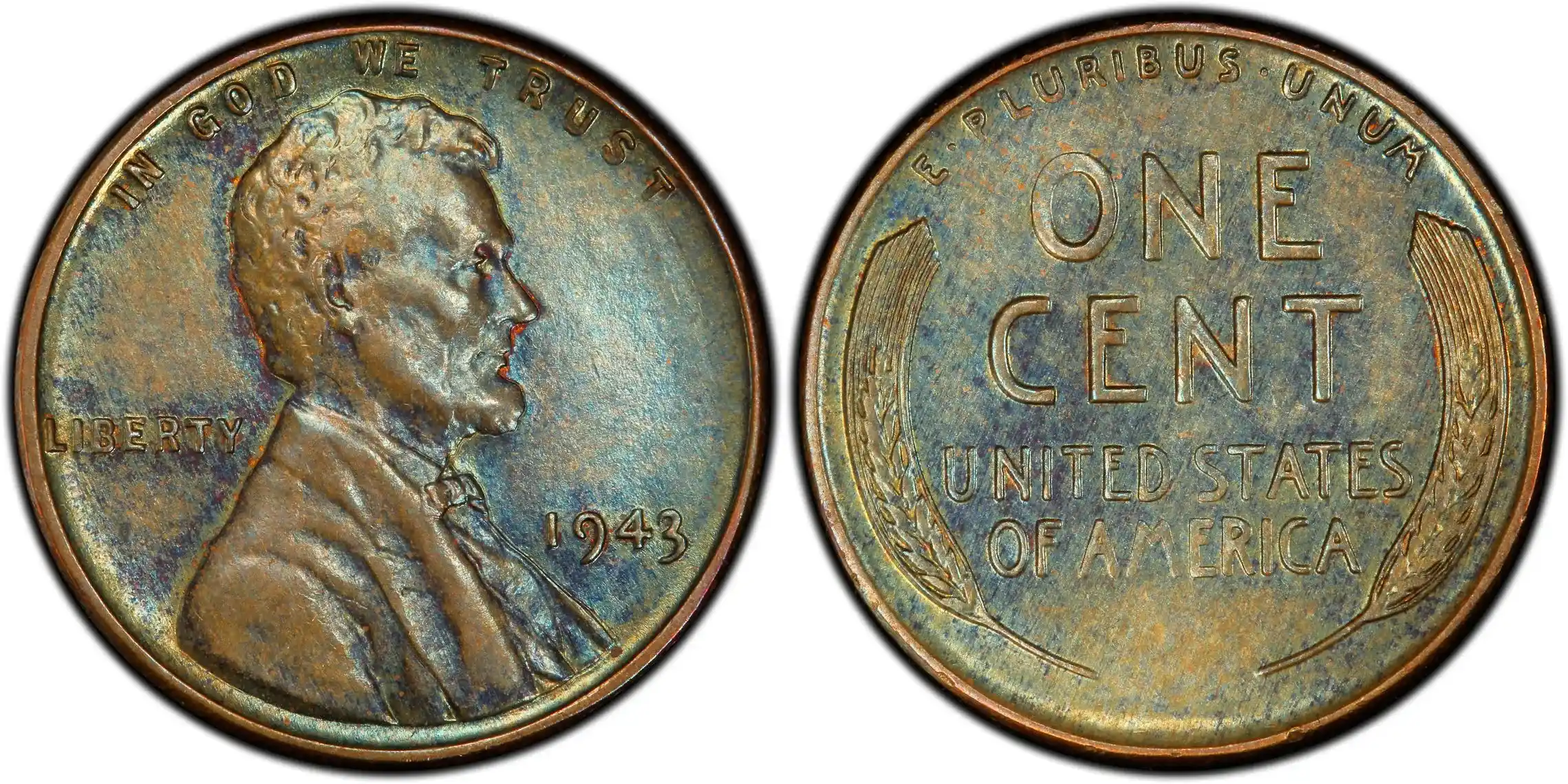
The top 100 pennies worth money market options show a wide asset value range, starting from a basic $3 price for common examples up to a massive $150,000 worth for extremely rare pieces.
Average circulation coins of medium quality bring owners a steady return of $10-500 value when people evaluate details correctly. Rare mint error coins can push real market price levels to $1,000-15,000 value, giving quick capital growth.
Year and Mint Mark | Coin Weight in Grams | Weak Condition Price | Medium Condition Price | Record Auction Price |
1909-S VDB | 3.11 g | $700-950 | $1,500-2,500 | $168,000 |
1914-D | 3.11 g | $150-280 | $800-1,200 | $152,000 |
1922 Plain No D | 3.11 g | $500-800 | $2,000-3,500 | $92,000 |
1943 Copper | 3.11 g | $100,000-150,000 | $250,000-350,000 | $1,700,000 |
1955 DDO | 3.11 g | $1,100-1,400 | $2,200-3,000 | $125,000 |
1969-S DDO | 3.11 g | $10,000-15,000 | $30,000-45,000 | $126,000 |
1972 DDO | 3.11 g | $150-250 | $350-600 | $14,400 |
Value Structure Analysis of 1909-S VDB
This 1909-S VDB coin remains a standard for stable price growth on the numismatic market. Low mintage of only 484,000 pieces guarantees constant supply deficit. This asset value shows a yearly price increase of 5% to 8% based on preservation category.
Sheldon Grade Price Ranges
Exact price evaluation requires a scale from 1 to 70.
Grade VG-8
$750-900 value
Grade F-12
$950-1,150 value
Grade EF-40
$1,400-1,800 value
Grade MS-63
$2,200-3,100 value
Grade MS-65
$4,500-6,000 value
These numbers prove direct capital dependence on metal condition. Buying certified coins in plastic holders minimizes investment loss risks.
Value Loss Elements
Amateur cleaning attempts destroy asset business potential. Any mechanical cleaning or chemical patina removal lowers the final coin price by 50% to 70%. Dark brown metal pieces sell much cheaper than bright red-brown coins. Price difference between MS-65 Brown and MS-65 Red Wood grades is more than $2,000 per coin.
Denver 1914-D Coin as an Investment Instrument
Denver mint coin issue of 1914 has a mintage of 1,193,000 pieces. High coin loss rate during circulation created a strong supply deficit in good condition. Today this position shows stable price demand.
Financial Parameters of Grade Value
Real deals show steady price ranges on specialized auctions.
Good 4 condition
$120-160 price
Fine 12 condition
$290-380 price
About Uncirculated 50 condition
$1,500-1,900 price
Mint State 63 condition
$2,800-3,600 price
Record price at Legend Rare Coin Auctions was $152,750 for an exceptional MS-66 Red coin.
Counterfeit Risks and Liquidity Loss
Fake coin distribution lowers market trust for uncertified pieces. Fraudsters often change the last date number on 1944-D coins. Sometimes they add a D mint mark to 1914 Philadelphia cents. Buying assets without expert PCGS or NGC certification leads to total investment capital loss. Uncertified coin worth drops to zero.
Die Error of 1922 Plain
Second die type of 1922 has a total absence of the D mint mark under the date. Due to minting equipment wear, grease filled the mint mark area. This grease stopped the letter from appearing on 3.11 g metal planchets.
Price Creation Cause and Effect
Worn mint machinery use
Complete D letter disappearance on metal blanks
Fast error batch removal from circulation
Artificial market supply deficit
Professional coin expert authentication of the second die type
Immediate market price growth to $3,000 worth
Coin Condition | Real Market Price | Five-Year Price Change Percentage |
VG-8 | $550-750 | +12% |
F-12 | $800-1,100 | +14% |
VF-20 | $1,200-1,600 | +15% |
EF-40 | $1,900-2,500 | +18% |
AU-50 | $3,200-4,500 | +22% |
Record price of $92,000 was registered for a rare MS-64 Brown coin at Heritage Auctions public sales.
Transitional Metal Error of 1943
War conditions forced metal saving for army equipment needs. Mints started making cents from steel with zinc coating weighing 2.7 g. Some copper planchets weighing 3.11 g remained inside minting machines. These metal blanks became rare copper cents of 1943.
Transitional Error Financial Statistics
Finding a rare coin in daily change
Auction sale for $100,000-200,000 price
Finding a coin in perfect condition
Value growth to $350,000-500,000 price range
Record steel coin price
$1,700,000 worth at private sales
Investors must know the authenticity check method for this rarity. A real copper cent of 1943 weighs exactly 3.11 g and has zero magnet reaction. Steel cents with copper plating made by fraudsters instantly react to magnets. This reaction destroys all coin value.
Die Doubling Image Details
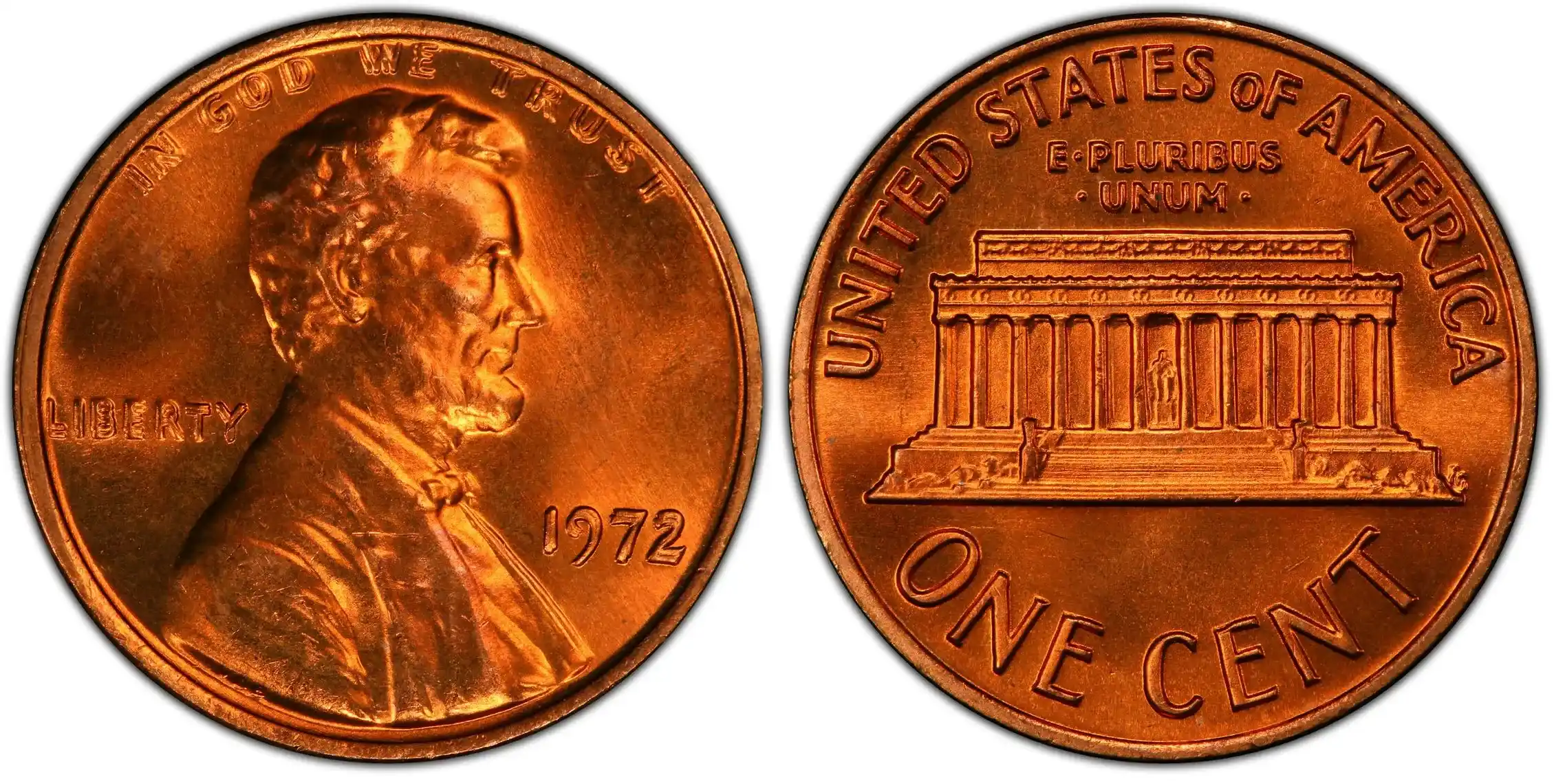
Die production errors caused a clear double outline on letters and numbers on the front side of the coin. The most expensive cents of this type are the 1955 and 1969-S issues.
Doubled Die Obverse Value Analysis
Price structure details for doubled letter varieties are listed below.
1955 DDO Brown AU-50
$1,800-2,200 price
1955 DDO Red MS-63
$3,500-4,800 price
1969-S DDO Brown AU-50
$12,000-17,000 price
1969-S DDO Red MS-64
$40,000-60,000 price
Trade statistics show 1969-S price growth speed dominance. San Francisco cents show a 10% to 12% price growth rate every year, beating 1955 cent indicators by 4%. Record price for the 1969-S DDO is $126,500, while the 1955 record stopped at $124,800 worth.
Value Economics of 1972 Variations
The 1972 Doubled Die Obverse variety is an affordable entry tool for copper cent investing. This rare variation mintage is estimated at several thousand pieces.
Current Market Price Offer Plan
Price depends heavily on metal color category.
Brown BN MS-63 color
$200-280 value
Red-Brown RB MS-64 color
$300-420 value
Red RD MS-65 color
$550-750 value
Premium Red RD MS-67 color
$2,500-3,800 value
Great condition guarantees profit return. Record price for MS-67 Red grade was $14,400 at GreatCollections.
Storage Condition Influence on Market Price
Copper metal is highly sensitive to environment factors. Bad storage conditions cause fast coin depreciation.
Metal Destruction Elements
High air humidity
Black rust point appearance
Storage in bad plastic holders
Sticky green layer formation
Direct finger contact
Dark fingerprint stains
Temperature changes
Fast bright metal surface darkening
Losing bright red color and dropping to red-brown category costs investors up to 40% of market price. Total copper darkening to brown condition takes another 30% of potential sale profit.