
Collecting rare coins provides people with a deep understanding of European history and modern economics because every small metal piece tells a specific story about its origin and production.
The European Central Bank produces billions of coins every year using high-speed industrial machines capable of creating thousands of units per minute.
Technical issues that occur during the minting process result in the creation of unique items with characteristics that differ from the standard design approved by national authorities.
Collectors often spend significant amounts of money searching for these specific pieces, which represent technical failures rather than intended artistic excellence.
The 2 euro coin value depends directly on the rarity of the error and the physical condition of the metal surface remaining after years of circulation.
By understanding the technical classification of mistakes, beginners identify valuable items hidden inside their regular wallets during daily shopping activities.
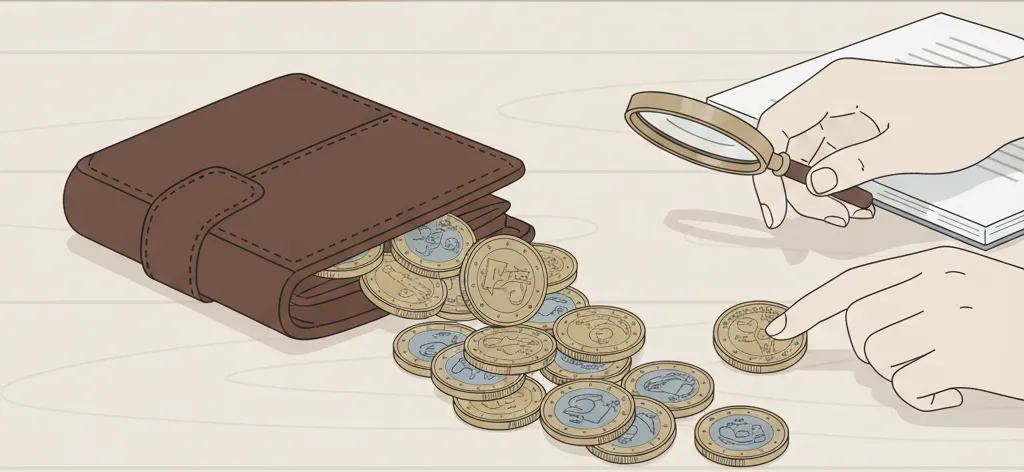
Common Types of Technical Production Failures
The most frequent error appearing on the market involves the displacement of the inner core relative to the outer ring because of incorrect positioning during the striking process.
This specific mistake creates a visible gap or an overlapping section, making the coin look asymmetrical and structurally unstable compared to perfect samples.
Another significant category includes coins with a double strike resulting from the machinery hitting the metal blank two times without moving it to the next stage of production.
Images appearing blurry or having doubled lines indicate a high level of mechanical malfunction occurring at the moment of high-pressure impact.
Rotated dies represent a technical failure where the front side and the back side do not align vertically according to the official technical documentation.
Investors check this by turning the coin horizontally and observing the angle of the map or the national symbol located on the opposite side.
Country of Origin | Error Description | Estimated Market Price |
Germany | Rotated Die (180 degrees) | 150 - 300 EUR |
France | Missing Map Details | 50 - 100 EUR |
Italy | Double Core Displacement | 200 - 500 EUR |
Belgium | Wrong Metal Composition | 400 - 800 EUR |
Spain | Deep Planchet Crack | 80 - 150 EUR |
Greece | Extra Star Material | 40 - 90 EUR |
Physical Material Defects and Surface Imperfections
The blank metal pieces used for coins sometimes arrive at the minting facility having internal cracks or surface contamination affecting the final result.
By appearing across the face of the coin, large cracks increase the price because such dramatic visual elements attract the attention of professional numismatists.
Incomplete planchets representing coins with missing segments occur when the cutting machine fails to produce a perfect circle from the metal sheet.
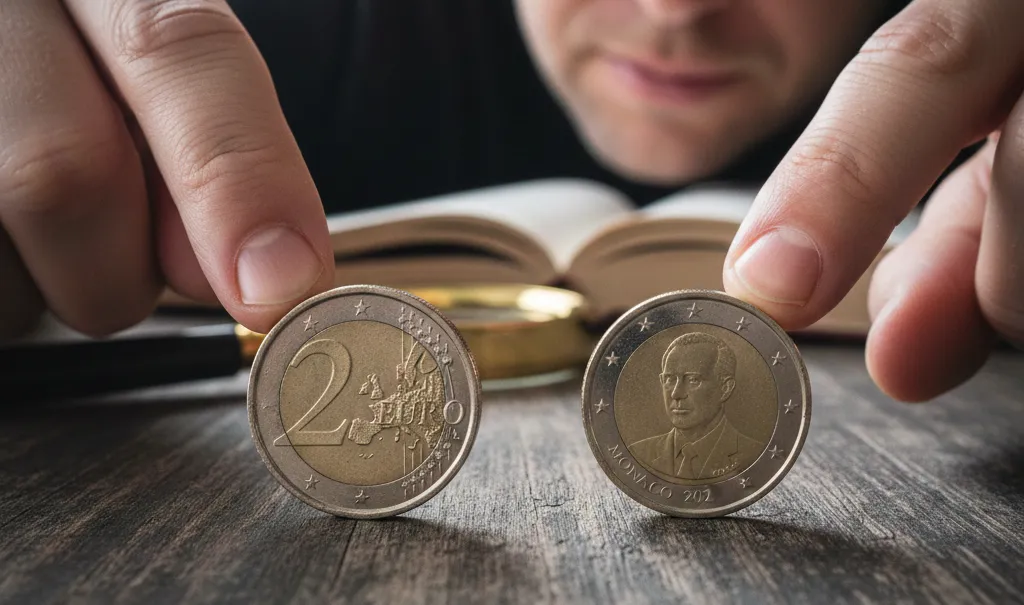
Finding a coin with a "clipped" edge requires careful observation of the weight and the diameter using precise electronic scales and professional measurement tools.
Lamination errors involving the peeling of the top layer of metal create a strange texture resembling old paper or damaged skin on the surface of the coin.
These items remain in circulation for a long time before someone understands the potential financial benefits of owning such a rarity and notices them.
Rare Examples of Incorrect Die Application
Sometimes workers at the mint use a die intended for a different denomination or a different country by accident during a night shift or a period of intense production.
A 2 Euro coin featuring the national side of a 1 Euro coin represents a massive error, generating thousands of euros in profit for the lucky owner at international auctions.
The "Mule" coin, appearing as a hybrid of two different designs, remains one of the most sought-after objects in the world of modern European numismatics.
Incorrect inscriptions on the edge of the coin also provide a source of profit because every country has a specific text or symbol engraved on the side.
Checking the edge with the coin identifier app for spelling mistakes or wrong symbols becomes a mandatory ritual for people hoping to find a small fortune in their pocket change.
Factors Influencing the Final Sale Price
The rarity of the specific technical mistake occurring during the one-second strike.
The overall preservation of the metal luster indicates the coin did not spend much time in dirty environments.
The demand from professional collectors living in Germany, France, and Italy who actively seek error coins.
The presence of a certificate from a professional grading company confirms the authenticity of the production failure.
The historical context of the minting year is particularly known for low quality control or machine updates.
The visual impact of the error makes it easy to see without using a magnifying glass or special lighting.
Scientific Methods of Identifying Authentic Mistakes
Professional numismatists use a high-resolution coin value checker app for examining the edges of the core and the ring to find signs of manual manipulation.
Fraudulent individuals often try to create fake errors by heating the metal or using heavy hammers to simulate production accidents in their private workshops.
By showing smooth transitions and consistent metal flow patterns, genuine errors differ significantly from artificial damage created by external tools after the coin left the mint.
Using X-ray fluorescence technology allows experts to verify the chemical composition of the alloy, ensuring the coin consists of the correct proportions of copper and nickel.
Weight analysis provides another layer of security because every 2 Euro coin must weigh exactly 8.5 grams within a very small margin of error.
Any significant deviation from this standard weight suggests either a major production mistake or a counterfeit item made by criminals.
Market Trends and Future Predictions for Collectors
The interest in error coins continues to grow as more people become aware of the high prices paid by wealthy investors during online auctions.
Modern minting technologies are becoming more accurate every year, reducing the number of errors entering the public circulation system — this trend makes old coins with errors from the early 2000s more valuable, since the number of new errors remains very limited.
Social media platforms allow collectors to share photos of their finds and discuss potential value with experts from around the world.
By participating in these communities, people are always aware of the latest discoveries and current price fluctuations in the numismatic market.